
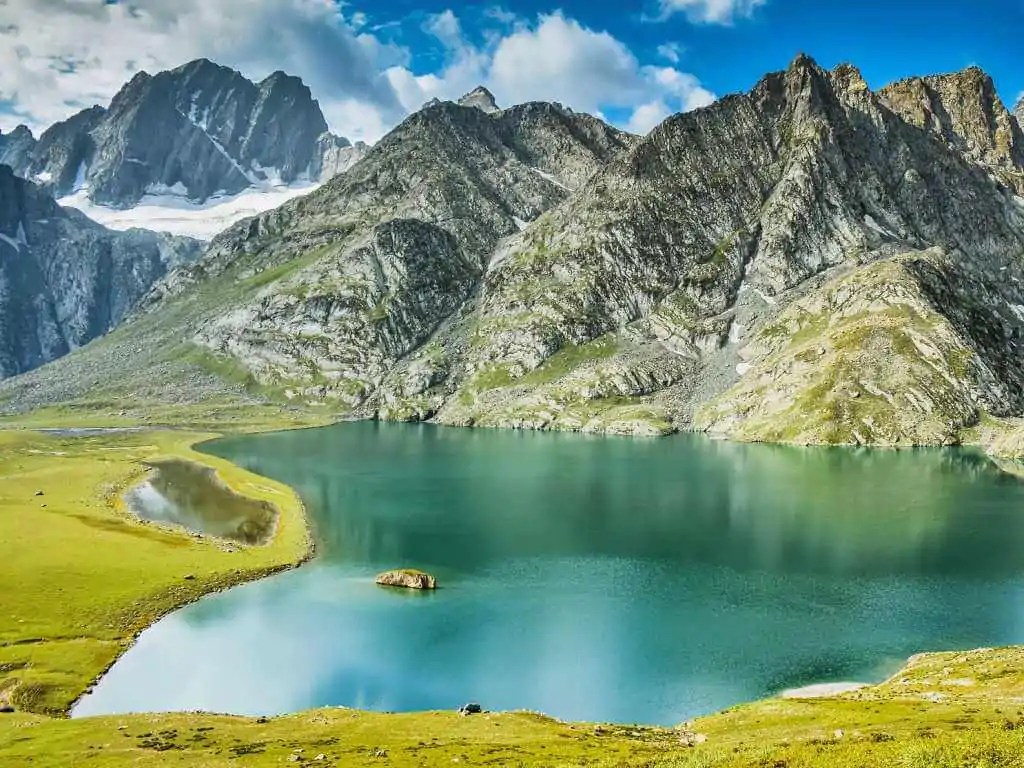
The Great Lakes Trek in Jammu and Kashmir is one of the most breathtaking high-altitude treks in India. Spanning approximately 70-75 km, this trek takes adventurers through an enchanting landscape of pristine alpine lakes, lush meadows, and towering snow-capped peaks. The journey offers an unparalleled opportunity to experience the raw beauty of the Himalayas while traversing some of the most picturesque terrains.
Overview of the Great Lakes Trek
- Location: Sonamarg to Naranag, Jammu and Kashmir
- Duration: 7-9 days
- Altitude Range: 7,800 ft to 13,800 ft
- Difficulty Level: Moderate to Difficult
- Best Time to Visit: July to September
- Highlights: Stunning alpine lakes, lush meadows, glacier views, and diverse flora and fauna
Major Highlights and Descriptions of Each Location:
1. Sonamarg – The Starting Point (Altitude: 7,800 ft)
Sonamarg, meaning “Meadow of Gold,” serves as the gateway to the Great Lakes Trek. Situated on the banks of the Sindh River, this charming valley is known for its lush greenery, snow-covered peaks, and picturesque landscapes.
- Things to Do: Explore the Thajiwas Glacier, visit the Sindh River, and enjoy the breathtaking views of the Zoji La Pass.
2. Nichnai Pass (Altitude: 13,000 ft)
The trek begins with an ascent through dense forests of maple and pine trees, eventually leading to Nichnai Pass. This section is marked by steep climbs, rocky trails, and lush green meadows.
- Things to Do: Enjoy panoramic views of the surrounding mountains, spot wildflowers, and take in the fresh mountain air.
3. Vishansar Lake (Altitude: 12,000 ft)
One of the most mesmerizing lakes on the trek, Vishansar Lake is a glacial lake surrounded by towering peaks and vast meadows. Its crystal-clear blue waters reflect the mountains, creating an ethereal view.
- Things to Do: Camp beside the lake, try trout fishing (with permission), and capture stunning sunrise and sunset views.
4. Krishansar Lake (Altitude: 12,100 ft)
Just a short hike from Vishansar Lake, Krishansar Lake is another breathtaking water body nestled amid the mountains. It changes color based on the time of day, shifting from deep blue to emerald green.
- Things to Do: Photography, relaxation, and nature walks around the lake.
5. Gadsar Pass & Gadsar Lake (Altitude: 13,750 ft & 12,500 ft)
The trek to Gadsar Pass is one of the most challenging stretches, but it offers unparalleled views of both Vishansar and Krishansar Lakes. The descent leads to Gadsar Lake, often referred to as the “Lake of Flowers” due to the abundance of wildflowers in the region.
- Things to Do: Spot Himalayan marmots and other wildlife, admire the wildflowers, and rest by the serene lake.
6. Satsar Lakes (Altitude: 12,000 ft)
A collection of seven interconnected alpine lakes, Satsar is another major attraction on the trek. These lakes are fed by melting snow and are surrounded by rocky terrain and meadows.
- Things to Do: Explore the lakes, interact with local shepherds (Gujjars), and enjoy the tranquility of the area.
7. Gangbal Lake and Nundkol Lake (Altitude: 11,500 ft & 11,700 ft)
Gangbal Lake is considered sacred by Kashmiri Hindus and is often visited for its spiritual significance. Just nearby is Nundkol Lake, located at the base of Harmukh Peak (16,870 ft), making for a stunning backdrop.
- Things to Do: Enjoy fishing, camp overnight, and soak in the panoramic views of Harmukh Peak.
8. Naranag – The Trek’s End (Altitude: 7,450 ft)
The final leg of the trek involves a steep descent through dense pine forests, leading to the quaint village of Naranag. The village is known for its ancient Shiva temple ruins and serves as the finishing point of the trek.
- Things to Do: Visit the Naranag temple ruins, interact with the locals, and relish the successful completion of the trek.
Best Time to Visit
The ideal time to undertake the Great Lakes Trek is between July and September. During this period, the snow has melted, revealing lush meadows, colorful wildflowers, and clear pathways. The temperatures range from 5°C to 20°C, making it comfortable for trekking.
Things to Do on the Great Lakes Trek:
- Photography: The scenic beauty of the alpine lakes and mountain landscapes make for stunning photographs.
- Camping: Experience the thrill of camping beside pristine lakes under the starlit sky.
- Fishing: Certain lakes like Vishansar and Gangbal allow trout fishing (with permission).
- Wildlife Spotting: Encounter marmots, Himalayan foxes, and various migratory birds.
- Interact with Locals: Meet the nomadic Gujjar and Bakarwal communities who inhabit the region during summer.
- Meditation & Relaxation: The peaceful surroundings offer an ideal environment for meditation and self-reflection.
Essential Trekking Tips:
- Physical Preparation: Train well in advance with cardio and endurance exercises.
- Pack Wisely: Carry warm clothing, waterproof gear, a sturdy backpack, and a good-quality sleeping bag.
- Stay Hydrated: Drink ample water to prevent altitude sickness.
- Follow Trekking Ethics: Respect the environment by avoiding littering and disturbing wildlife.
- Permit Requirements: As the trek passes through protected areas, check for necessary permits before starting the journey.
Conclusion
The Great Lakes Trek in Jammu and Kashmir is a dream destination for trekking enthusiasts. Its breathtaking alpine lakes, diverse landscapes, and challenging trails offer an unforgettable adventure. Whether you seek solitude, adventure, or a spiritual connection with nature, this trek has something for every traveler.
Embark on this mesmerizing journey to witness the unparalleled beauty of the Himalayas and create memories that will last a lifetime.
 Choose your right destination
Leave a comment