
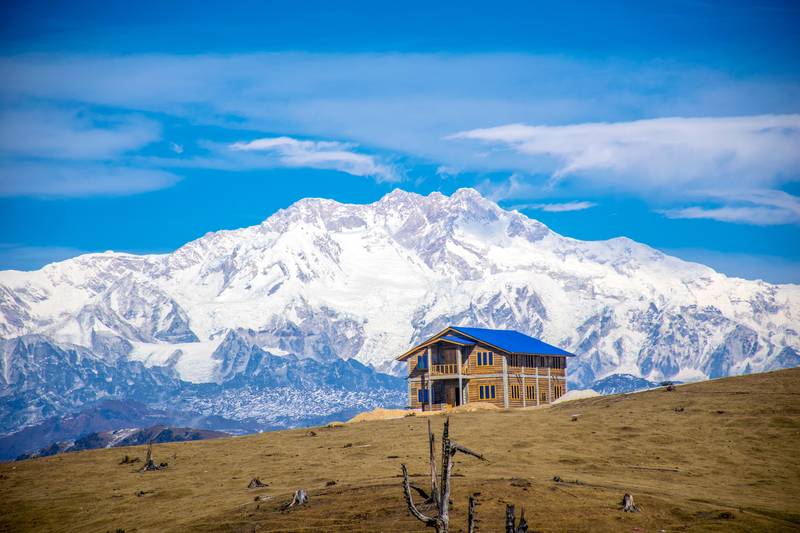
Certainly! Here’s another image showcasing the breathtaking vistas of the Sandakphu Trek:
Transportation and Accessibility
Reaching the starting point of the Sandakphu trek involves multiple transportation options:
- By Air: The nearest airport is Bagdogra Airport in West Bengal, approximately 90 km from Darjeeling. From Bagdogra, travelers can hire taxis or take shared vehicles to reach Darjeeling and subsequently Manebhanjan.
- By Train: The closest major railway station is New Jalpaiguri (NJP), well-connected to major cities across India. From NJP, shared jeeps, buses, or private taxis can transport travelers to Darjeeling or directly to Manebhanjan.
- By Road: Manebhanjan is accessible via road from Darjeeling (28 km), Siliguri (92 km), and other nearby towns. Regular shared jeeps and buses operate on these routes.
Alternative Trekking Routes
While the traditional route from Manebhanjan is popular, alternative trails offer unique experiences:
- Via Dhotrey: Starting from the village of Dhotrey, this route passes through dense forests and picturesque landscapes, merging with the main trail near Tonglu.
- Via Rimbik: Trekking from Rimbik offers a less-traveled path, passing through serene villages like Srikhola and Gurdum before ascending to Sandakphu.
Cultural Insights
The trek provides a deep dive into the cultural tapestry of the region:
- Ethnic Communities: The trail traverses villages inhabited by diverse communities, including Sherpas, Tamangs, and Rai. Engaging with locals offers insights into their traditions, festivals, and daily life.
- Local Cuisine: Trekkers can savor traditional dishes like momos (dumplings), thukpa (noodle soup), and gundruk (fermented leafy greens), reflecting the culinary heritage of the Himalayas.
Environmental Conservation
Trekkers are encouraged to practice responsible tourism:
- Leave No Trace: Carry back all non-biodegradable waste to preserve the pristine environment.
- Stay on Marked Trails: To minimize ecological impact and prevent soil erosion, it’s essential to stick to designated paths.
- Wildlife Respect: Maintain a safe distance from wildlife and avoid disturbing their natural habitats.
Photography Opportunities
The trek offers myriad photography prospects:
- Golden Hour: Sunrise and sunset at Sandakphu provide golden hues illuminating the Himalayan peaks, ideal for landscape photography.
- Flora and Fauna: Macro photography enthusiasts can capture the intricate details of blooming flowers and endemic insects.
- Night Sky: With minimal light pollution, the clear nights are perfect for astrophotography, showcasing a canopy of stars.
Local Festivals
Aligning the trek with local festivals can enrich the experience:
- Losar: Celebrated by the Tibetan community, Losar marks the Tibetan New Year with vibrant dances, songs, and feasts, usually falling between February and March.
- Dasain: A major festival among the Nepali-speaking communities, Dasain symbolizes the victory of good over evil and is celebrated with family gatherings and traditional rituals in October.
Connectivity and Communication
While the trek offers an escape from urban life, staying connected is possible:
- Mobile Networks: Major Indian telecom providers have intermittent coverage along the trail. However, connectivity can be patchy, especially in dense forests and valleys.
- Internet Access: Some lodges offer basic Wi-Fi services, but it’s advisable to expect limited connectivity and use the opportunity to disconnect and immerse in nature.
Health and Safety
Ensuring well-being during the trek involves:
- Altitude Awareness: Monitor for symptoms of Acute Mountain Sickness (AMS), such as headaches, dizziness, or nausea. Descend immediately if symptoms worsen.
- First Aid Kit: Carry a personal medical kit with essentials like band-aids, antiseptics, pain relievers, and any personal medications.
- Emergency Contacts: Keep a list of local emergency contacts, including park authorities and nearest medical facilities.
Local Legends and Folklore
The region is rich in myths:
- Sleeping Buddha: The Kanchenjunga range, as viewed from Sandakphu, resembles a reclining figure, often referred to as the “Sleeping Buddha.” Locals believe it symbolizes tranquility and protection.
- Yeti Tales: Stories of the “Yeti” or “Abominable Snowman” are part of local folklore, with villagers sharing tales of mysterious sightings in the high altitudes.
Responsible Tourism
Contributing positively to the region includes:
- Supporting Local Businesses: Choosing local guides, porters, and lodges ensures that tourism benefits the community directly.
- Cultural Sensitivity: Respect local customs, dress modestly, and seek permission before photographing locals or their properties.
Post-Trek Attractions
After completing the trek, consider exploring nearby attractions:
- Darjeeling: Known as the “Queen of the Hills,” Darjeeling offers attractions like the Himalayan Mountaineering Institute, Padmaja Naidu Himalayan Zoological Park, and the famous Darjeeling tea gardens.
- Kalimpong: A serene hill station with monasteries, flower nurseries, and panoramic views, perfect for relaxation and cultural exploration.
Embarking on the Sandakphu trek is not just a journey through breathtaking landscapes but also an immersion into the rich cultural and natural heritage of the Eastern Himalayas. With proper preparation and a spirit of adventure, trekkers can create memories that last a lifetime.
Descent Options:
- Retrace to Manebhanjan: Trekkers can return via the same route.
- Sirikhola Route: A steep descent to the village of Sirikhola, passing through Gurdum (2,300 m), and onward to Rimbik.
- Gorkhey and Samanden Route: From Phalut, descend to Gorkhey, then to Samanden, and proceed to Rammam, culminating at Rimbik.
Flora and Fauna
The trek traverses the Singalila National Park, renowned for its rich biodiversity. Trekkers can encounter:
- Flora: Rhododendrons, magnolias, primulas, and a variety of orchids, especially vibrant during spring.
- Fauna: Red pandas, Himalayan black bears, clouded leopards, and over 120 species of birds, making it a birdwatcher’s haven.
Best Time to Trek
The optimal periods for the Sandakphu trek are:
- Spring (March to May): Rhododendrons and other flora are in full bloom, enhancing the trail’s beauty.
- Autumn (September to November): Clear skies offer unobstructed views of the Himalayan peaks.
The park remains closed to tourists from June 16 to September 15 due to monsoons.
Accommodation and Facilities
Along the trail, trekkers can find accommodations in the form of trekkers’ huts and guesthouses at locations like Tonglu, Gairibans, Sandakphu, Phalut, and Kala Pokhri. These facilities are managed by the Darjeeling Gorkha Hill Council. Additionally, numerous guesthouses are available in Manebhanjan. Camping is also an option within the national park.
Permits and Regulations
Trekkers are required to obtain permits to enter the Singalila National Park. These can be acquired at the entry point in Manebhanjan. It’s essential to adhere to park guidelines to preserve the environment and ensure safety.
Cultural Experience
The trek offers insights into the local culture of the region. Villages like Tumling and Gorkhey provide opportunities to experience the traditions and lifestyles of the local communities. Interacting with locals and experiencing their hospitality adds a rich cultural dimension to the trek.
Preparation and Safety Tips
- Physical Fitness: Ensure a good fitness level, as the trek involves steep ascents and descents.
- Acclimatization: Allow time for acclimatization to prevent altitude sickness.
- Gear: Carry appropriate trekking gear, including warm clothing, sturdy boots, and rain protection.
- Hydration and Nutrition: Stay hydrated and carry energy-rich snacks.
- Guides and Porters: Hiring local guides and porters can enhance the experience and support the local economy.
 Choose your right destination
Leave a comment