
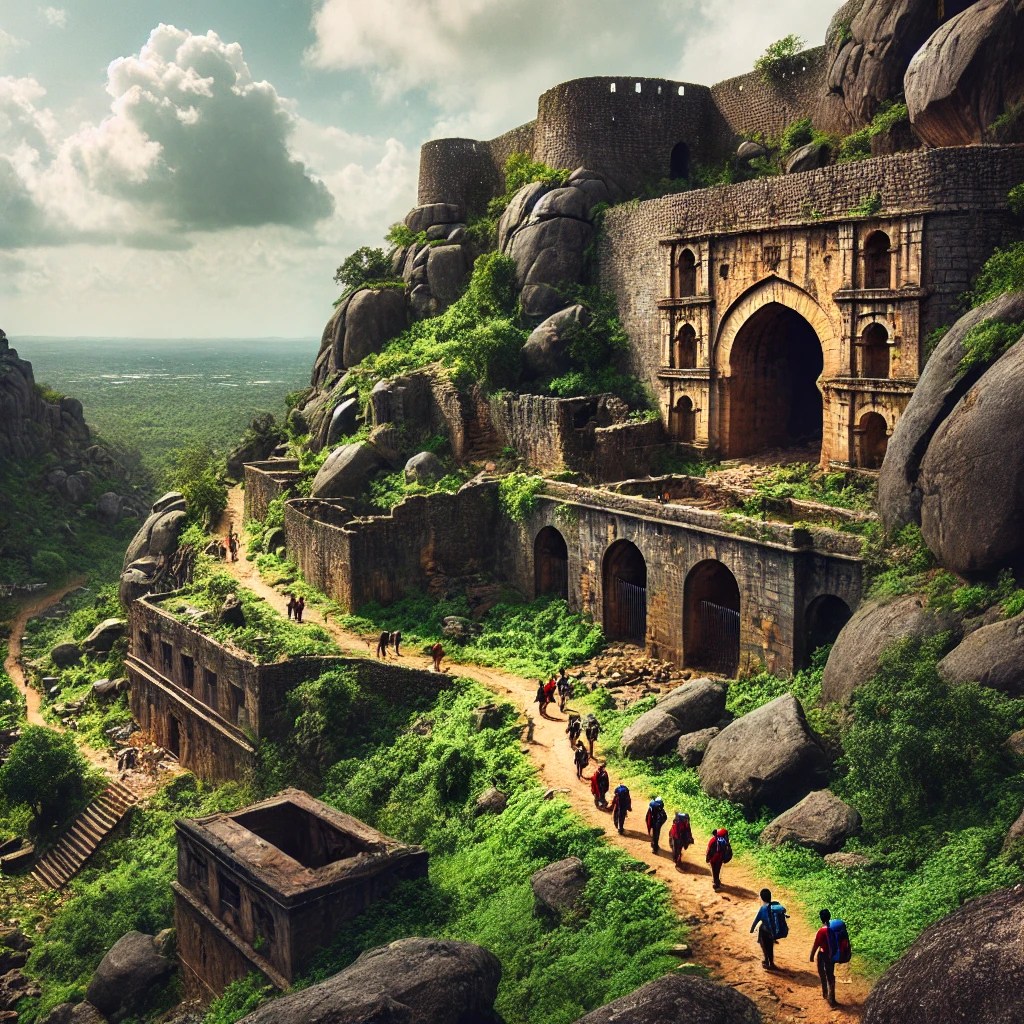
Here’s an image of Koulas Fort, showcasing its ancient architecture, lush surroundings, and the trekking trail leading up to it.
Trekking is one of the best ways to connect with nature while exploring the remnants of history. For adventure seekers and history enthusiasts alike, the Koulas Fort Trek presents a perfect blend of both. Nestled in the Nizamabad district of Telangana, Koulas Fort is a hidden gem that offers a fascinating glimpse into the region’s past while challenging trekkers with its rugged terrain. This trek is not only about the thrill of climbing but also about unraveling the stories of an ancient stronghold that once played a crucial role in regional politics and warfare.
History of Koulas Fort
Koulas Fort dates back to the Kakatiya dynasty and was later occupied by the Bahmani and Qutb Shahi rulers before falling into the hands of the Asaf Jahi dynasty. The fort stands as a testimony to the architectural brilliance of medieval India, with massive walls, gateways, and bastions that showcase the strategic importance of the site. The fort is believed to have served as a military outpost and a refuge for rulers during times of conflict.
The ruins of palaces, granaries, water tanks, and secret escape routes found within the fort complex indicate the fort’s self-sufficiency in sustaining its inhabitants. Despite the passage of time, the fort still retains an air of grandeur and mystery, drawing explorers and trekkers from far and wide.
How to Reach Koulas Fort
Koulas Fort is located in the Kamareddy district of Telangana, approximately 150 km from Hyderabad. The nearest town is Kamareddy, which is well connected by road and rail. From Kamareddy, travelers can hire a taxi or use local transport to reach the base village of Koulas. The trek to the fort begins from this point, where trekkers are greeted with picturesque landscapes and historical remnants.
The Trekking Experience
Starting Point and Route
The trek to Koulas Fort starts from the base village, where visitors can catch a glimpse of the rural life of Telangana. The trail gradually ascends through rocky paths, patches of dense vegetation, and open meadows. The total trekking distance is around 3-4 km, making it an ideal trek for beginners and experienced trekkers alike.
Difficulty Level
The trek is of moderate difficulty, with a mix of steep climbs and relatively flat stretches. While no specialized equipment is needed, wearing sturdy trekking shoes is advisable as some sections can be slippery, especially during the monsoon season.
Key Attractions on the Trek
- Majestic Entrance Gateway: As you ascend towards the fort, the first thing that captures your attention is the impressive entrance gateway. Built with large stone blocks, this gateway stands as a testament to the fort’s former grandeur.
- Granaries and Water Tanks: Inside the fort, you can explore ancient granaries and water tanks that were used to store food and water supplies. These structures highlight the fort’s ability to sustain its residents during prolonged sieges.
- Secret Tunnels: One of the intriguing aspects of the Koulas Fort is its network of hidden tunnels. These tunnels were built as escape routes during enemy attacks and add an element of mystery to the trek.
- Panoramic View from the Top: Upon reaching the highest point of the fort, trekkers are rewarded with breathtaking panoramic views of the surrounding landscapes. The view from the top is especially mesmerizing during sunrise and sunset.
- Temple and Mosques: The fort complex houses remnants of Hindu temples and mosques, signifying the diverse cultural influences of the region’s rulers. The architectural details of these religious structures provide insight into the syncretic heritage of Telangana.
Best Time to Visit
The ideal time to embark on the Koulas Fort Trek is between October and March when the weather is pleasant and conducive for trekking. The monsoon season (June to September) brings lush greenery, making the fort look even more picturesque, but the trails can be slippery. Summer months (April to June) can be extremely hot, making the trek challenging.
Essential Tips for Trekkers
- Wear comfortable trekking shoes to navigate the rocky terrain safely.
- Carry sufficient water and snacks as there are no shops or facilities available along the trek route.
- Start early in the morning to avoid trekking under the harsh sun.
- Carry a first-aid kit for any minor injuries or emergencies.
- Respect the historical site by not littering and avoiding any damage to the ruins.
- Travel in a group or with a guide for a more enriching experience.
Local Culture and Cuisine
After completing the trek, visitors can explore the nearby villages and towns to experience the local culture. The region is known for its rich Telugu and Deccan heritage, reflected in its festivals, traditions, and food. Trekkers can savor authentic Telangana dishes like Sarva Pindi (spicy rice pancake), Jonna Roti (sorghum bread), and Gongura Pickle, which offer a unique taste of the region’s culinary traditions.
Conclusion
The Koulas Fort Trek is more than just an adventure; it is a journey through history. The fort’s magnificent ruins, breathtaking landscapes, and intriguing past make it a must-visit destination for history buffs, nature lovers, and trekking enthusiasts. Whether you seek a challenging hike, an offbeat travel experience, or a chance to explore a lesser-known historical marvel, Koulas Fort delivers on all fronts. So pack your bags, put on your trekking shoes, and embark on a memorable expedition to this ancient fortress of Telangana.
 Choose your right destination
Leave a comment