
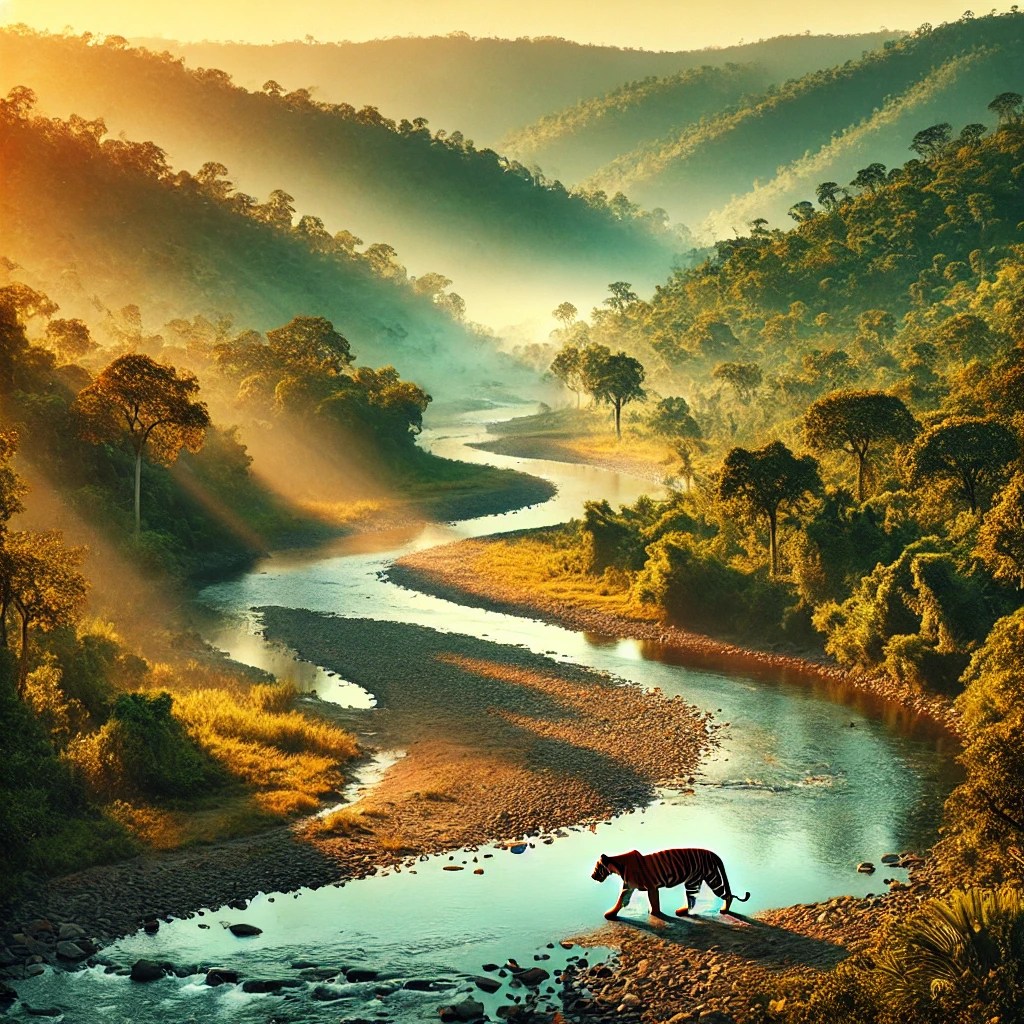
A stunning view of Jim Corbett National Park, capturing its serene landscape and iconic wildlife.
India is a land of diverse landscapes and ecosystems, making it home to some of the world’s most spectacular wildlife sanctuaries. For nature enthusiasts, these sanctuaries offer an incredible opportunity to witness the country’s rich biodiversity while immersing in scenic beauty. Here’s a detailed guide to the best wildlife sanctuaries in India worth exploring:
1. Jim Corbett National Park, Uttarakhand
Established in 1936, Jim Corbett National Park is the oldest national park in India. It’s renowned for being a safe haven for the endangered Bengal tiger. The park is a mix of grasslands, riverine belts, marshes, and hills, making it a paradise for wildlife photographers and birdwatchers. Apart from tigers, you can spot elephants, leopards, and various species of deer. The park also hosts over 600 bird species, making it a bird lover’s delight.
Best time to visit: November to June
Key activities: Jeep safari, elephant safari, birdwatching
2. Ranthambore National Park, Rajasthan
Famed for its population of majestic tigers, Ranthambore National Park combines history and wilderness. The park is dotted with ancient ruins, including the iconic Ranthambore Fort, which adds a historical charm to your wildlife exploration. Besides tigers, you can spot sloth bears, wild boars, crocodiles, and a variety of birds.
Best time to visit: October to June
Key activities: Tiger safari, photography, visiting Ranthambore Fort
3. Kaziranga National Park, Assam
Kaziranga is a UNESCO World Heritage Site and is globally celebrated for its population of the endangered one-horned rhinoceros. The park’s vast stretches of tall elephant grass, wetlands, and dense forests provide an ideal habitat for elephants, wild water buffalo, and swamp deer. Kaziranga is also home to large populations of migratory birds.
Best time to visit: November to April
Key activities: Elephant safari, jeep safari, birdwatching
4. Sundarbans National Park, West Bengal
The Sundarbans, a UNESCO World Heritage Site, is the world’s largest mangrove forest and home to the elusive Royal Bengal Tiger. The park is a labyrinth of tidal waterways, mudflats, and small islands. It’s an exceptional place for wildlife enthusiasts who wish to explore the unique ecosystem and spot saltwater crocodiles, wild boars, and water monitor lizards.
Best time to visit: October to March
Key activities: Boat safaris, exploring mangrove forests, birdwatching
5. Periyar Wildlife Sanctuary, Kerala
Nestled in the Western Ghats, Periyar Wildlife Sanctuary is known for its scenic beauty and diverse wildlife. The heart of the sanctuary is the Periyar Lake, where boat rides offer a chance to spot elephants, gaur (Indian bison), otters, and a variety of birds. The sanctuary is also home to tigers and leopards, though they are more elusive.
Best time to visit: September to March
Key activities: Boat safari, nature walks, bamboo rafting
6. Gir National Park, Gujarat
Gir National Park is the only place in the world where you can see the majestic Asiatic lion in the wild. The park features dry deciduous forests, acacia scrub, and grasslands, providing the perfect habitat for lions. Other wildlife includes leopards, striped hyenas, and a variety of deer species.
Best time to visit: December to March
Key activities: Jeep safari, birdwatching
7. Bandipur National Park, Karnataka
Once the hunting grounds of the Maharajas of Mysore, Bandipur is now a protected reserve known for its population of tigers and elephants. It forms part of the Nilgiri Biosphere Reserve along with Mudumalai, Wayanad, and Nagarhole. The park is rich in sandalwood trees, and sightings of leopards, wild dogs, and sloth bears are common.
Best time to visit: October to March
Key activities: Jeep safari, nature walks
8. Keoladeo National Park, Rajasthan
Formerly known as Bharatpur Bird Sanctuary, Keoladeo is a UNESCO World Heritage Site and a birdwatcher’s paradise. It hosts thousands of migratory birds, including the Siberian crane, during the winter months. The park’s wetlands and woodlands also provide refuge for turtles, pythons, and various mammals.
Best time to visit: October to March
Key activities: Birdwatching, cycling, walking tours
9. Hemis National Park, Ladakh
Hemis is the largest national park in India and is famous for being the best place to spot the elusive snow leopard. The rugged terrain and high-altitude desert make it a thrilling destination for adventure-seekers and wildlife photographers. Other wildlife includes Himalayan ibex, Tibetan wolf, and red fox.
Best time to visit: May to September
Key activities: Trekking, wildlife photography
Final Thoughts
India’s wildlife sanctuaries are a treasure trove of biodiversity, offering a chance to experience nature in its rawest form. From the mangroves of Sundarbans to the deserts of Rajasthan and the snow-capped mountains of Ladakh, each sanctuary offers a unique adventure. Whether you’re a wildlife enthusiast, photographer, or nature lover, these sanctuaries promise an unforgettable journey into the wild.
So pack your bags, grab your camera, and set out on an adventure to explore India’s incredible wildlife sanctuaries!
 Choose your right destination
Leave a comment