
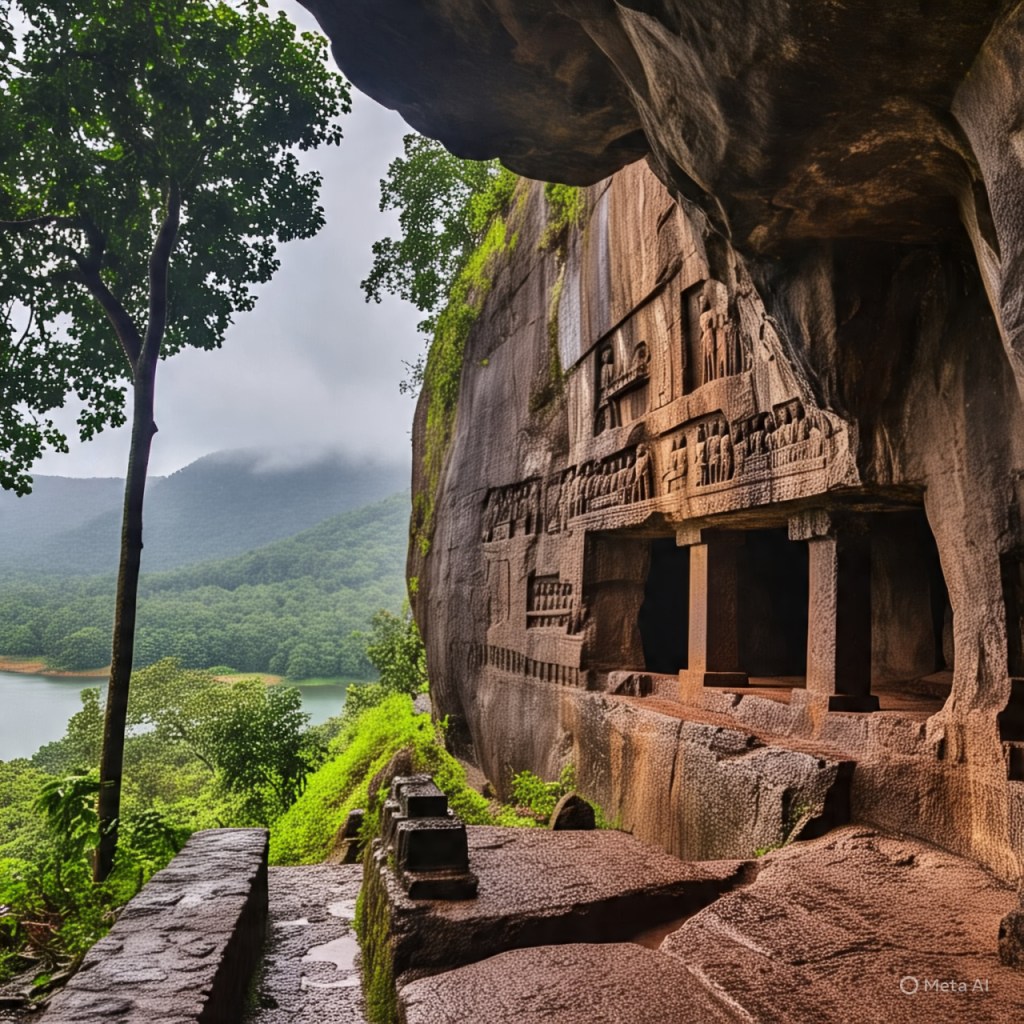
Tucked away in the misty hills of Wayanad, Kerala, the Edakkal Caves are far more than just natural rock formations—they are living testaments of ancient civilizations, mystery, and timeless art. For anyone interested in archaeology, history, or adventure, these caves offer an unparalleled journey into the past.
As you ascend the rugged trail and finally reach these iconic caverns, you’re not just entering a cave—you’re walking into a story carved in stone.
The Enigmatic Location of Edakkal
The Edakkal Caves are located about 25 kilometers from Kalpetta and are nestled in the Ambukuthi Hills, a part of the Western Ghats. Set at an altitude of 1,200 meters above sea level, they offer breathtaking views of the surrounding Wayanad valleys.
How to reach Edakkal Caves
- By road: Easily accessible by taxis and buses from Kalpetta or Sulthan Bathery.
- Nearest railway station: Kozhikode (around 100 km away).
- Nearest airport: Calicut International Airport.
Transitional tip: While the journey might seem a bit off the beaten path, reaching Edakkal is part of the adventure that makes it a must-visit on any Wayanad travel itinerary.
The Trek to Time Travel
To reach the entrance of the Edakkal Caves, visitors must undertake a moderate trek of about 1.5 kilometers, including steep steps and rocky terrain. Though a bit challenging, the trek is manageable and offers scenic landscapes and forest cover that prepare you for the wonders ahead.
What makes the trek special?
- Panoramic views of Wayanad’s lush greenery.
- Cooling mountain breeze and rich flora.
- Frequent sightings of monkeys and birds.
Transitional thought: By the time you reach the caves, you already feel a sense of discovery—both natural and historical.
The History Behind the Edakkal Caves
The word Edakkal means “a stone in between,” referring to the massive boulders wedged between two cliffs, forming the cave-like structure. But beyond the geology lies something even more captivating—the ancient petroglyphs, or rock engravings, believed to be over 6,000 years old.
Historical significance
- The carvings are attributed to the Neolithic and Mesolithic periods.
- Symbols include human figures, tribal motifs, animals, weapons, and symbols.
- Some inscriptions are thought to date back to 3000 BCE, making them among the oldest known human-made structures in South India.
Transitional insight: These carvings link Edakkal not just to Indian prehistory, but also to a broader human story of early communication, ritual, and daily life.
Decoding the Cave Carvings
What sets Edakkal apart from other caves in India is its extensive array of prehistoric petroglyphs. These symbols and drawings are etched with remarkable precision, suggesting that early humans used tools and had a complex symbolic language.
Highlights of the carvings:
- A human figure wearing a headdress, possibly a tribal leader or deity.
- Symbols resembling celestial bodies or religious icons.
- A hunting scene that shows bows, arrows, and wild animals.
Archaeologists believe that the Edakkal cave carvings represent different time periods, showing a timeline of human settlement and evolution in the region.
Transitional takeaway: Whether you’re a history buff or a curious traveller, the richness of these carvings provides a visceral connection to our ancient ancestors.
Myths and Local Legends
No place as mysterious as Edakkal is without its fair share of myths. According to local folklore, the caves are linked to the epic Mahabharata. It is believed that the cave was used by the Pandava prince Luv or Lava, son of Lord Rama.
Some legends also claim that the caves were once a place of ritual or spiritual importance, adding a mystical aura to their historical depth.
Transitional idea: While science tries to explain Edakkal’s origins, its legends continue to enrich the site’s cultural fabric.
Visitor Experience and Facilities
Unlike some heritage sites that feel overly commercialized, Edakkal maintains a balance between tourism and preservation. There are designated viewing areas, trained guides, and information panels that help you understand the site better.
Facilities at Edakkal:
- Clean restrooms and refreshment stalls at the base.
- Local shops selling handicrafts and souvenirs.
- A small museum near the entrance showcasing excavated artifacts.
Transitional suggestion: After exploring the caves, take some time to interact with local artisans or sip tea while absorbing the views—the experience is holistic, not hurried.
Best Time to Visit Edakkal Caves
The ideal time to explore the caves is during the cooler months from October to March, when the weather is pleasant, and the trek is more enjoyable. The caves are open from 9 AM to 4 PM, with the last entry usually allowed by 3 PM.
Transitional tip: Avoid visiting during the monsoon (June–September), as the path becomes slippery and fog may obstruct the views.
Why Edakkal Caves Should Be on Your Bucket List
There are many reasons why Edakkal Caves continue to attract tourists, historians, and spiritual seekers alike:
- It’s one of the few prehistoric sites in India open to the public.
- Offers a perfect blend of adventure, history, and nature.
- A great day trip destination for those exploring Wayanad and North Kerala.
Transitional wrap-up: If you’re planning a trip to Wayanad, skipping Edakkal would be missing a key piece of the region’s rich puzzle.
Conclusion: A Walk Through Time
In a world full of modern attractions, the Edakkal Caves stand out as an authentic window into the past. They offer a rare glimpse into human life thousands of years ago—through symbols, stories, and stone.
Whether you’re a solo traveller, a family on vacation, or a researcher with a passion for ancient civilizations, a trip to Edakkal promises a unique blend of discovery, reflection, and awe.
So next time you’re exploring Kerala, take the road to Wayanad and carve out time for Edakkal. Because some places aren’t just to be seen—they are to be felt and remembered.
 Choose your right destination
Leave a comment